

Frozen meals and pizzas are a staple in the grocery store, and the market has evolved. From their earliest iterations—oven-heated ‘TV Dinners’ developed and introduced in 1953—to the variety of products available today, the frozen food market has continued to grow.
Whether in economic booms or busts, consumers turn to frozen products as both a cure to their hectic lifestyles and an affordable alternative to going out. In fact, the frozen foods market has experienced a resurgence in recent years, growing 2.6% to $57 billion annually in 2018, according to the American Frozen Food Institute (AFFI) and Food Marketing Institute (FMI).
This growth has been driven largely by appetizers, sides, entrees, and breakfast foods, as frozen foods become increasingly popular as part of the “total meal solution” according to “The Power of Frozen” report.
However, as the products have evolved, consumer tastes have evolved along with them, presenting an opportunity and a challenge for frozen food manufacturers looking to capitalize on the revitalization of this industry.
Knowing this, for food manufacturers, there are few things more challenging than working with cheese. The ingredient that often holds a product together—whether it’s an appetizer, sandwich, quesadilla, entree or pizza—adding cheese to a frozen food often presents a challenge. Especially as consumers have begun to move toward “premium” frozen food products including organic and high quality ingredients, they expect the product to be attractive to match the price point.
The CMM Group Releases Cheese Melter Guide for Frozen Food Manufacturers
For companies looking to maintain their food’s presentation throughout the manufacturing and distribution process—handling the bumping, dropping, and jostling that products experience, one secret to handling this is the cheese pre-melter—considered an unsung hero for companies like yours.
The CMM Group has completed projects for global, national, regional, and local manufacturers and can provide solutions for multiple points of the food manufacturing process. We offer complete baking, production, and pollution control solutions to food manufacturers of all sizes, and can also design custom products to fit into your current processes, regardless of the original equipment manufacturer (OEM).
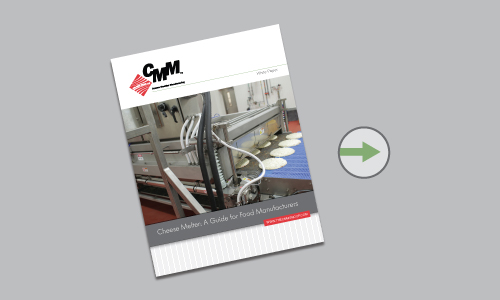
To help companies understand the value of and opportunities to use a cheese pre-melter, The CMM Group has released a new guide on the selection, documentation, and purchasing process for custom infrared cheese pre-melters. In this guide, we will discuss a wide variety of topics:
- What is infrared heating and why does it matter in the food manufacturing industry?
- Why should food manufacturers use a cheese pre-melter and what benefits do they receive?
- What are the benefits and disadvantages of electric and natural gas cheese melters?
- What should you look for in an infrared cheese melter?
- Why should you opt for a custom cheese melter instead of going with a standard product?
- What goes into the selection and consultation process when choosing a custom cheese pre-melter?
- How can you ensure safe, reliable, and food-safe operation of your infrared cheese pre-melter?
The CMM Guide to Industrial Cheese Melters
If you are looking to learn more about the path to purchase for this important piece of equipment, we are pleased to announce a new guide on the benefits, use cases, and path to purchase for cheese melters. Preview this guide below and click here to download the entire guide to selecting, installing, and using a cheese melter.