


Project Description
From Wastewater to Resource Recovery: CMM and Condorchem Advance Zero Liquid Discharge for a Canadian Manufacturer
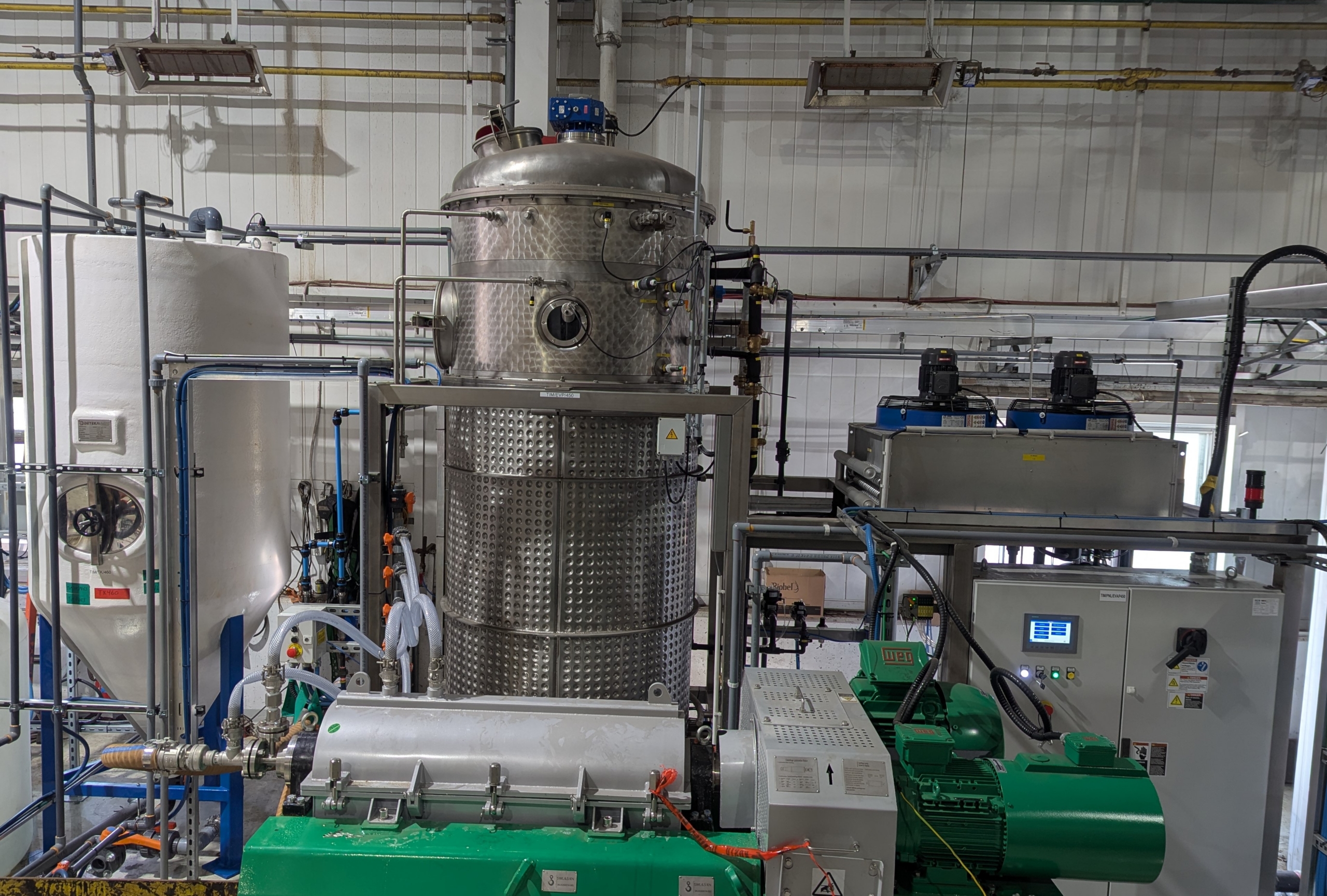
High-salinity wastewater is often expensive to treat and dispose of. For one Canadian manufacturer, it became an opportunity to recover valuable resources.
To support the customer’s Zero Liquid Discharge (ZLD) goals, The CMM Group and Condorchem Enviro Solutions partnered to design, supply, and commission an electrical vacuum crystallization system that recovers both water and process salts for reuse.
The result is a closed-loop solution that turns wastewater into reusable process inputs while reducing freshwater use and raw material demand.
The Challenge
The customer generated a large brine stream containing sodium chloride (NaCl) and potassium chloride (KCl).
Instead of treating this stream as waste, the customer wanted to recover useful materials and create a more sustainable process.
A key requirement was recovering the NaCl and KCl in the specific ratio needed for reuse in production.
The Solution
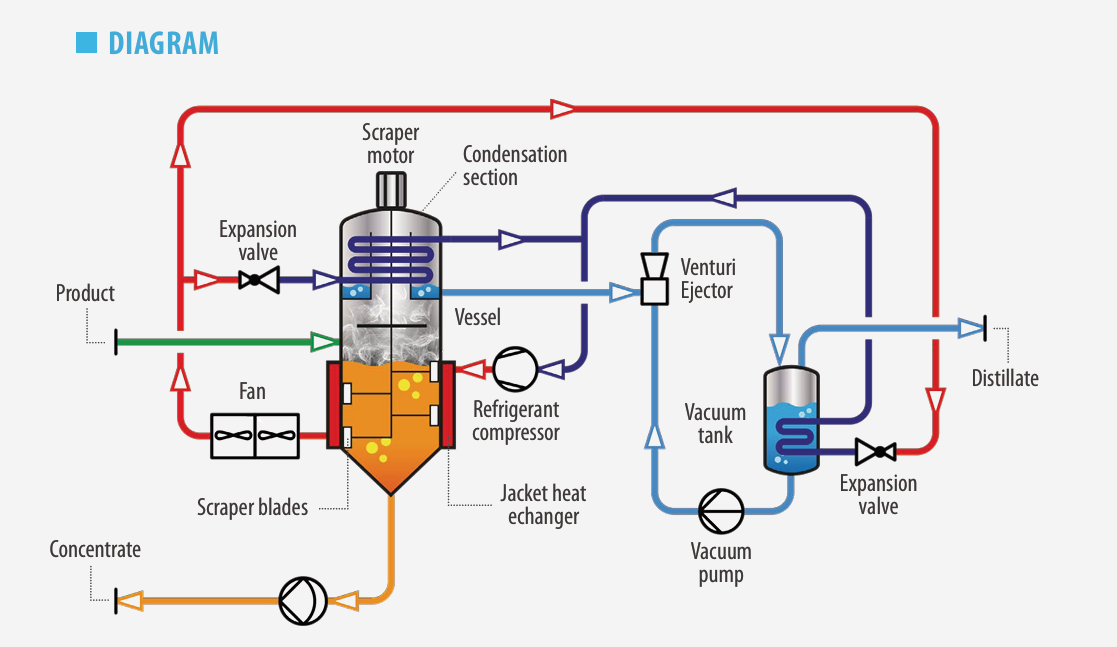
CMM and Condorchem delivered an electrical vacuum crystallizer with integrated heat pump technology to recover resources efficiently and reduce energy use.
The system separates the brine into two valuable products:
Recovered Process Water
High-purity distillate is recovered for reuse at the facility, reducing freshwater consumption.
Recovered Process Salts
Sodium chloride and potassium chloride are recovered as crystalline solids and returned to the customer’s manufacturing process.
The system was engineered to recover the salts in the precise ratio required by the operation, making the recovered material a valuable process input.
This approach turns wastewater treatment into resource recovery and advances the customer’s ZLD strategy.
Energy-Efficient by Design
The vacuum crystallizer uses electricity and high-efficiency heat pump technology as its primary energy source.
Compared with conventional systems that often rely on natural gas, steam, and cooling water, this solution:
- Requires no steam or cooling water
- Operates using electricity as its only energy source
- Recovers and reuses thermal energy through an integrated heat pump
- Uses vacuum technology to reduce evaporation temperatures and energy demand
Operating under vacuum lowers the boiling point of the wastewater, allowing evaporation at lower temperatures. Combined with heat pump energy recovery, this reduces operating costs, emissions, and reliance on fossil fuels.
Key Outcomes
Enabled True Zero Liquid Discharge
The system converts a challenging brine stream into reusable water and recovered salts, supporting the customer’s ZLD strategy.
Recovered Salts for Direct Process Reuse
Sodium chloride and potassium chloride crystals are recovered in the required ratio and reused in a critical production step.
Reduced Freshwater Consumption
Recovered distillate is returned for reuse, helping lower the facility’s need for fresh process water.
Eliminated Steam and Cooling Water Requirements
The fully electric, heat-pump-driven design eliminates the need for steam and cooling water systems.
Advanced Sustainable Resource Recovery
By minimizing waste, reusing water, and returning recovered salts to production, the project supports a more sustainable manufacturing process.
Partnership in Action
This installation highlights the partnership between The CMM Group and Condorchem Enviro Solutions. CMM supported project execution, integration, controls, and commissioning, while Condorchem provided advanced evaporation and crystallization technology.
Together, CMM and Condorchem helped a multinational manufacturer convert a high-volume brine stream into reusable water and process salts, supporting ZLD, sustainability, and operational goals.
Project Highlights
- Zero Liquid Discharge (ZLD) focused solution
- Recovery and reuse of sodium chloride and potassium chloride crystals
- Recovery and reuse of process water
- Electrical vacuum crystallizer with integrated heat pump technology
- Reduced dependence on virgin raw materials
- Lower energy consumption than conventional atmospheric-pressure systems